
Los Angeles has world-class art museums, science centers, and cultural institutions. Still, some of the city’s most memorable museums are hard to compare to anything else.
You can walk through an actual battleship, explore a museum that deliberately blurs the line between fact and fiction, stand beside fossils being recovered from the ground in the middle of the city, or explore the relationship between Los Angeles and the automobile inside a building that looks like a sculpture itself.
If you have already visited the Getty, LACMA, and the Natural History Museum—or want a museum experience that feels distinctly Los Angeles—start with these unusual places.
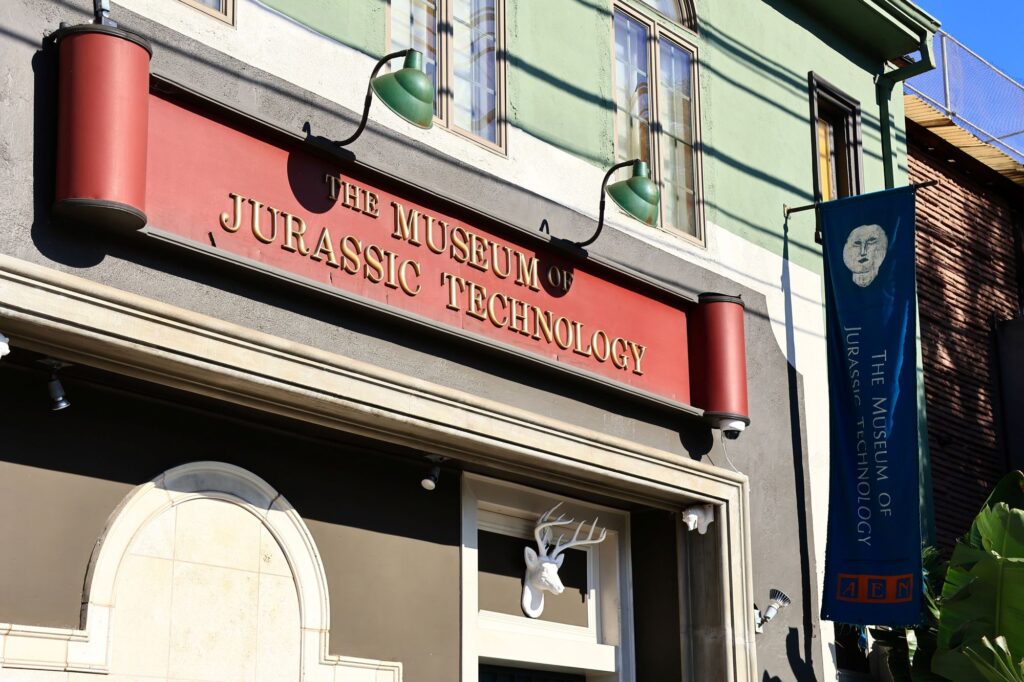
The Museum of Jurassic Technology located at 9341 Venice Blvd, Culver City, Los Angeles County by Walter Cicchetti.
Museum of Jurassic Technology — Best for the Truly Unusual
The Museum of Jurassic Technology in Culver City may be the hardest museum in Los Angeles to explain, which is precisely why it belongs at the top of a list like this.
Its small galleries combine history, science, folklore, art, curiosities, and stories that encourage visitors to question where fact ends, and interpretation begins. It feels more like an old cabinet of curiosities than a modern museum, and rushing through it misses the point.
Recent visitor reviews repeatedly describe the museum as unlike anything else they experienced in Los Angeles. Some spend several hours exploring a building that appears relatively modest from the street.
What visitors consistently like: The sense of discovery, unusual collections, intimate atmosphere, and the feeling that another room or unexpected detail is always around the corner.
What to know before you go: This is not a conventional museum and probably isn’t the best choice for visitors who want straightforward labels and explanations. The ambiguity is intentional. Reservations are recommended.
Best for: Curious adults, museum enthusiasts, couples, artists, repeat Los Angeles visitors, and anyone who enjoys the strange and unexpected.
Official site: Museum of Jurassic Technology
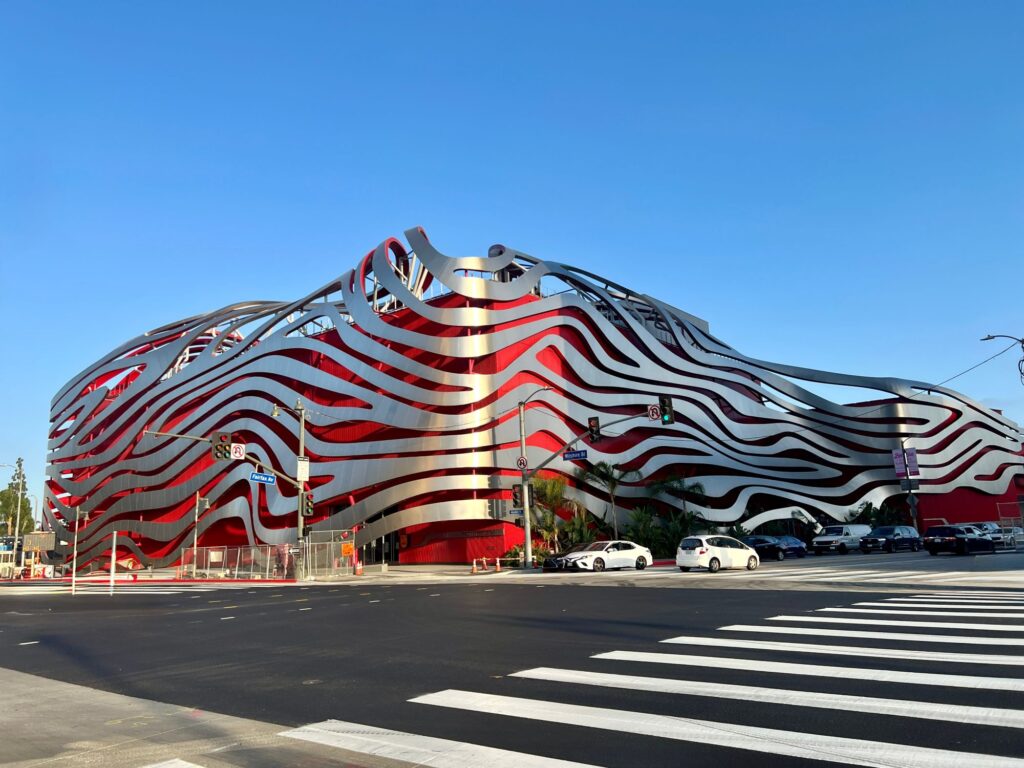
Striking curved building facade of Petersen Automotive Museum with flowing red and silver striped pattern, resembling ribbons or waves, clear blue sky above by Vesperstock.
Petersen Automotive Museum — Best for Cars, Design and Los Angeles Culture
Even before you enter the Petersen Automotive Museum, it is clear this isn't an ordinary car museum. Its dramatic exterior wraps the building in flowing stainless-steel ribbons, making the architecture part of the experience.
Inside, the automobile becomes a way to explore much more than transportation. Exhibitions examine design, engineering, racing, technology, Hollywood, customization, and the enormous influence cars have had on Southern California culture.
The variety is one of the Petersen’s biggest strengths. Serious automobile enthusiasts can spend hours studying historically important vehicles. At the same time, visitors with little interest in automotive history may find themselves drawn to movie cars, concept vehicles, motorcycles, race cars, or the design process behind them.
The optional Vault experience provides access to an even larger collection and is frequently singled out by automobile enthusiasts as worth adding to a visit.
What visitors consistently like: The variety and quality of the vehicles, changing exhibitions, movie cars, design, and the opportunity to see rare vehicles in the Vault.
What to know before you go: The museum is larger than it initially appears. Visitors who add the Vault can easily spend several hours here. The Vault requires an additional ticket.
Best for: Car enthusiasts, design fans, families with older children, engineers, movie fans, and anyone interested in the relationship between automobiles and Los Angeles.
Official site: Petersen Automotive Museum

A rainbow over the Port of Los Angeles main channel, Battleship Iowa, a cruise ship, container port operations and Vincent Thomas suspension bridge. Credit Brad Nixon.
Battleship IOWA — Best for Stepping Inside History
At most history museums, the largest artifacts are objects you walk around. At Battleship IOWA, you walk through the artifact.
The historic U.S. Navy battleship is permanently berthed on the LA Waterfront in San Pedro and serves as home to the National Museum of the Surface Navy. Visitors explore multiple decks, moving through passageways, living and working spaces, equipment, and the enormous systems required to operate a battleship.
That setting is what makes the experience unusual. The guns' size, the narrow passageways, the scale of the decks, and the ship's complexity are hard to appreciate in photographs or display cases.
The newer Life of a Sailor experience shifts the emphasis from simply touring a warship to understanding the people who lived and worked aboard Navy ships. As visitors move through the ship, they gain a connection to sailors and encounter stories, skills, traditions, and responsibilities.
What visitors consistently like: Access to the ship itself, knowledgeable crew and volunteers, the battleship's scale, sailor stories, naval history, and the chance to explore a place that feels fundamentally different from a traditional museum.
What to know before you go: This is a real Navy ship, so some areas involve ladders, narrow passageways, and uneven surfaces. Allow roughly two to three hours for a general visit if you want to explore without rushing.
Best for: History enthusiasts, families, veterans, engineering-minded visitors, military-history fans, teens, and travelers looking for an immersive experience.
Official site: Battleship IOWA
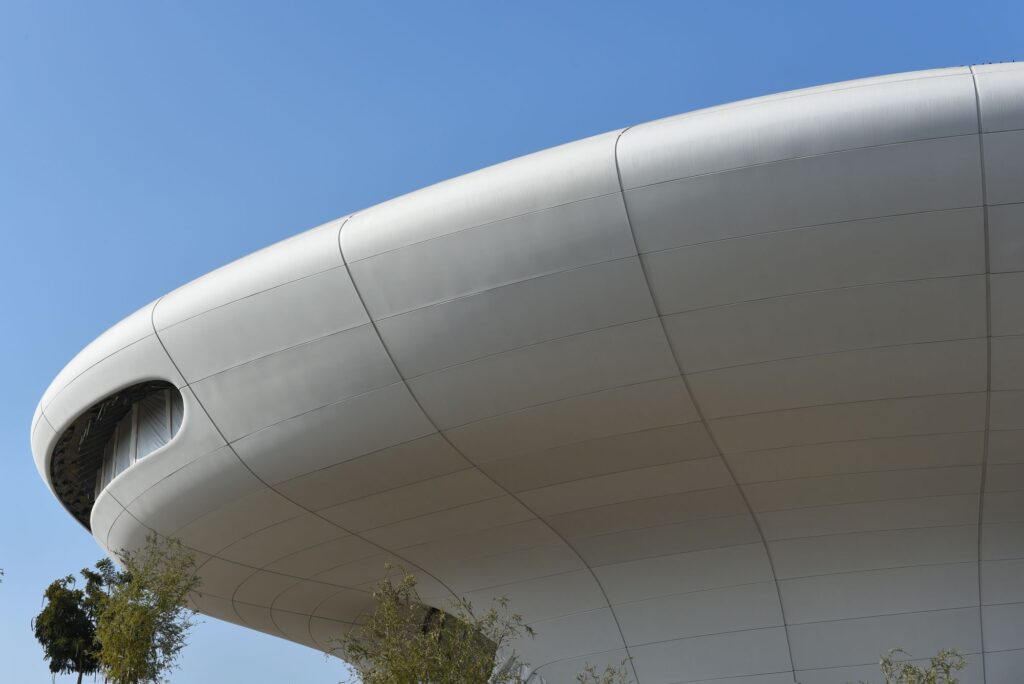
Detail of the Lucas Museum of Narrative Art in Exposition Park, still under construction, opening in 2026. Photo by Steve Cukrov.
Lucas Museum of Narrative Art — Best for Art, Film, and Storytelling
The Lucas Museum of Narrative Art in Exposition Park is one of Los Angeles's newest major cultural attractions, bringing fine art, illustration, comics, and cinema together in a striking architectural landmark.
Founded by filmmaker George Lucas and Mellody Hobson, the museum explores how images tell stories and shape culture. Opened in September 2026, its expansive galleries feature everything from Norman Rockwell paintings and comic book illustrations to cinematic artifacts and Star Wars memorabilia. The museum also features film screenings, landscaped gardens, and spaces designed to encourage visitors to experience storytelling in unexpected ways.
As a newly opened museum, long-term visitor review patterns are still developing. Its distinctive architecture, ambitious collection, and combination of traditional art with popular culture make it a notable addition to Los Angeles's museum landscape.
What visitors consistently like: Visitor feedback is still limited, but major attractions include the distinctive architecture, extensive art collections, cinematic exhibits, and the chance to explore visual storytelling across cultures and generations.
What to know before you go: The museum is located in Exposition Park near the California Science Center and Natural History Museum. Timed-entry tickets are required, and reservations are recommended. This museum focuses on visual storytelling, not exclusively Star Wars or George Lucas's films.
Best for: Art enthusiasts, movie fans, families, Star Wars enthusiasts, architecture lovers, and visitors interested in the relationship between art and popular culture.
Official site: https://lucasmuseum.org/
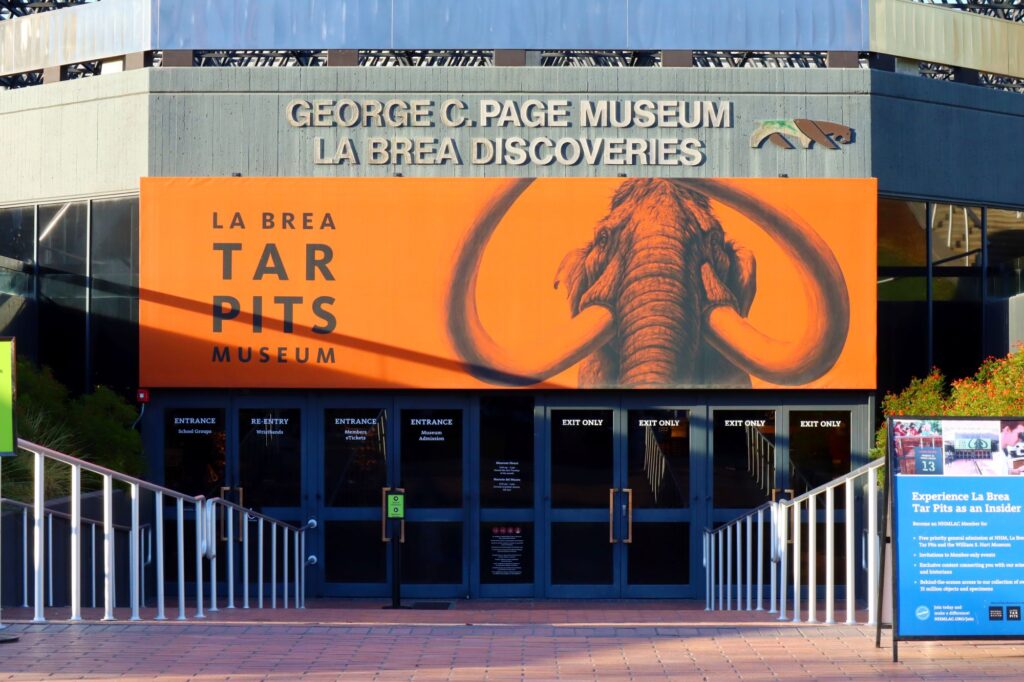
LA BREA TAR PITS and Museum, one of the world’s most famous fossil excavation sites located at 5801 Wilshire Blvd, Los Angeles by Walter Cicchetti.
La Brea Tar Pits — Best for Discovering Prehistoric Los Angeles
Natural-history museums exist worldwide. Far fewer places have scientists studying an Ice Age fossil site in the middle of a modern metropolis.
That is what makes La Brea Tar Pits so distinctly Los Angeles.
For tens of thousands of years, natural asphalt trapped plants and animals here. The fossils recovered here have allowed researchers to reconstruct an earlier Southern California inhabited by mammoths, dire wolves, saber-toothed cats, giant ground sloths, and other species.
The unusual part of the experience is the connection between the science and the location. Visitors aren’t simply looking at fossils transported from elsewhere; they walk through the landscape where those fossils are still found.
What visitors consistently like: Seeing the tar seeps, learning that significant scientific work happens in the center of Los Angeles, and connecting fossils to the site where they were discovered.
What to know before you go: La Brea is undergoing a major transformation. The indoor museum is closed for renovations, while parts of the outdoor park and excavation-related experiences remain open. Check current visitor information before planning a trip.
Best for: Families, dinosaur and fossil enthusiasts, science-minded visitors, and anyone who wants to see a side of Los Angeles that predates the city by thousands of years.
Official site: La Brea Tar Pits
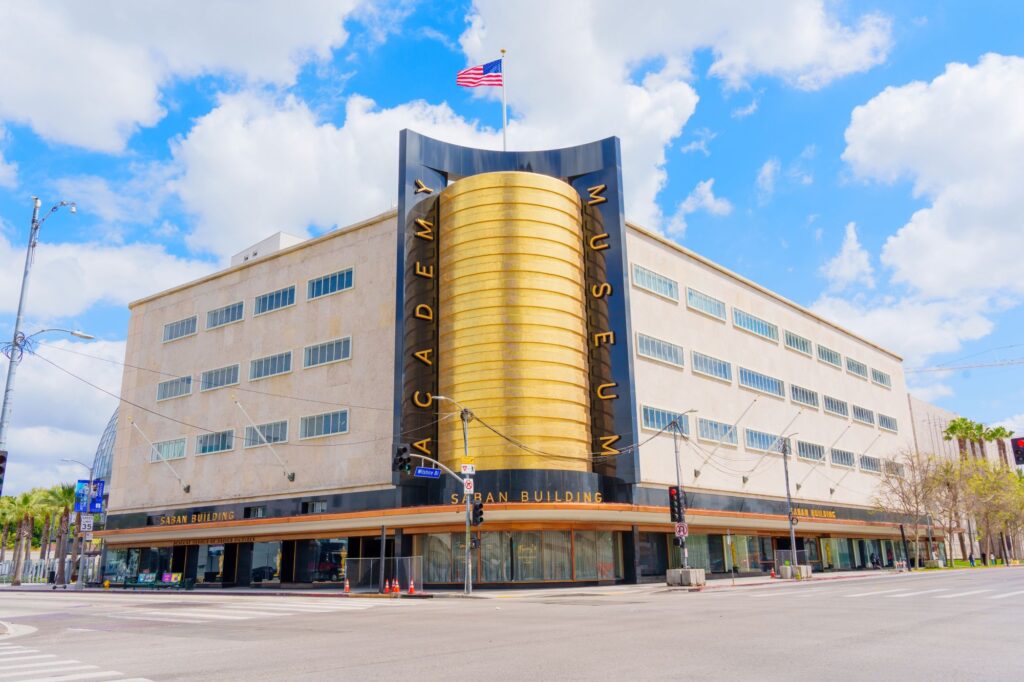
Academy Museum building by Katie Chizhevskaya.
Museums about cinema exist worldwide, but a major filmmaking museum in Los Angeles has a different context.
The Academy Museum sits in the middle of a city whose studios, neighborhoods, craftspeople, theaters, actors, directors, designers, and technicians have shaped global cinema for more than a century.
Rather than focusing only on movie stars and famous props, the museum examines filmmaking as a collaborative art form. Costumes, objects, technology, production design, animation, visual effects, sound, cinematography, and changing exhibitions show how movies are actually created.
The building also enhances the experience, especially the dramatic sphere and terrace overlooking Los Angeles.
What visitors consistently like: Movie artifacts, changing exhibitions, production stories, the architecture, and the opportunity to explore filmmaking beyond celebrity culture.
What to know before you go: Exhibitions change, so two visits can be quite different. Film fans should check what's on view before choosing a date.
Best for: Movie fans, filmmakers, students, pop-culture enthusiasts, and first-time visitors interested in the industry most associated with Los Angeles.
Official site: Academy Museum of Motion Pictures
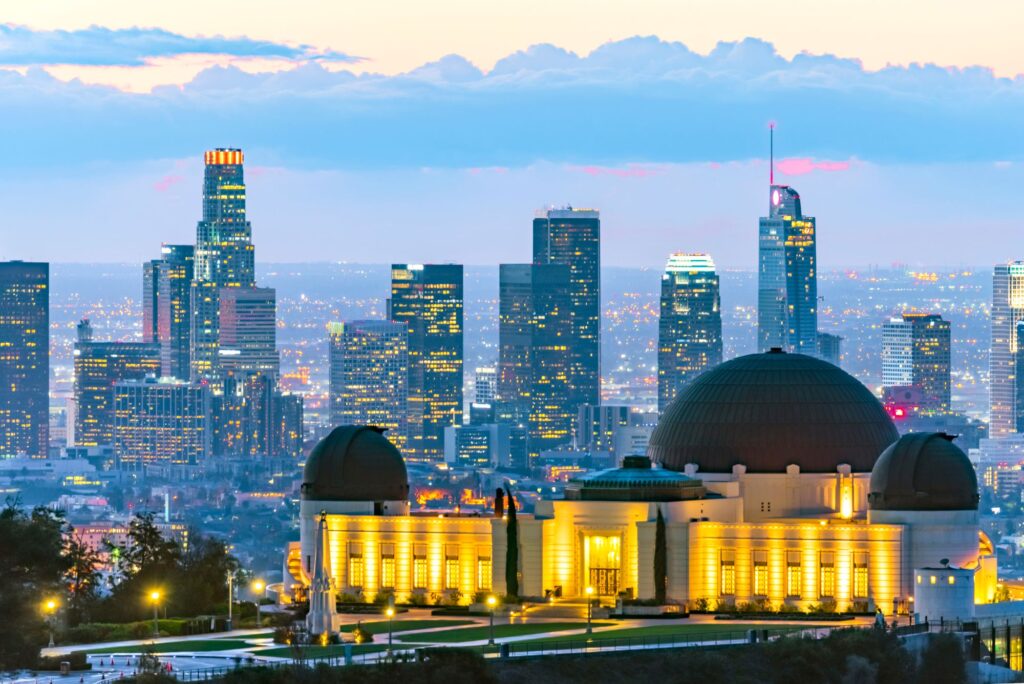
Griffith Observatory at twilight by John.
Griffith Observatory — Best Combination of Science and a Los Angeles Landmark
Griffith Observatory occupies a rare position between museum, science center, historic landmark, and destination.
The exhibits explain astronomy and humanity’s relationship with the universe, but the location changes the experience. Visitors can step outside, look across the actual city toward the Hollywood Sign, and look up at the sky the exhibits help them understand.
The observatory has also become part of Los Angeles’ cultural identity through decades of appearances in film and television.
That means a visit works on several levels at once: science, architecture, history, popular culture, and one of the city’s most recognizable viewpoints.
What visitors consistently like: The views, architecture, astronomy exhibits, telescopes, planetarium experiences, and the combination of a museum visit with one of Los Angeles’ signature locations.
What to know before you go: Parking and crowds can be significant, particularly around sunset and on weekends. You can enjoy the building and grounds without purchasing general admission, though some programs have separate fees.
Best for: First-time Los Angeles visitors, families, science enthusiasts, photographers, couples, and anyone wanting a museum experience tied directly to the city.
Official site: Griffith Observatory

Campus of the J. Paul Getty Museum (Getty Museum), an art museum in California established in 1974 by Anton Ivanov Photo.
The Getty Center — Best Museum Where the Setting Is Part of the Collection
The Getty Center is not unusual because of one strange collection or immersive exhibit. It is unusual because the entire experience—architecture, landscape, gardens, art, views, and journey up the hill—functions as a whole.
Visitors can spend hours exploring European paintings, sculpture, decorative arts, manuscripts, and photography, then move outside into gardens and architecture overlooking Los Angeles.
For many visitors, the Getty is as much about being there as it is about seeing an individual masterpiece.
What visitors consistently like: The architecture, gardens, views, art quality, overall setting, and the ability to spend several hours without feeling confined to galleries.
What to know before you go: Admission to the Getty Center is free, but check reservations and parking requirements beforehand. The campus is large enough to occupy half a day or more.
Best for: First-time visitors, art lovers, architecture enthusiasts, couples, photographers, and travelers looking for a quintessential Los Angeles museum day.
Official site: Getty Center