
Some people learn best by reading. Others learn best by touching, experimenting, climbing, exploring, making choices, or physically experiencing the environment around them.
Fortunately, Los Angeles has museums for both.
The city’s best interactive museums range from traditional science centers filled with hands-on experiments to children’s museums built entirely around play and historic environments where simply moving through the space becomes part of the experience.
These are some of the strongest choices for visitors who want to do more than look.
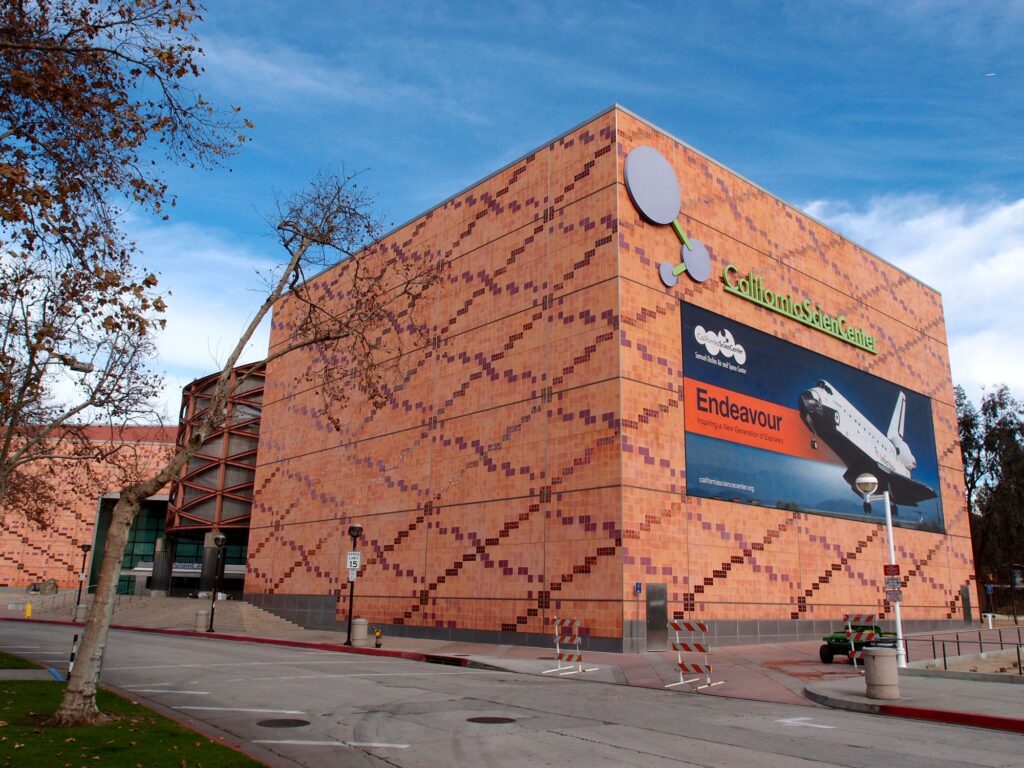
California Science Center Featuring the Endeavour Space Shuttle by Eric BVD.
California Science Center — Best Overall Hands-On Science Museum
The California Science Center has long been one of Los Angeles’ best choices for visitors who want to experience science through participation rather than lectures.
Exhibitions explore living systems, ecosystems, technology, engineering, and scientific principles through experiences that encourage experimentation and curiosity.
The museum works particularly well for school-age children because many scientific ideas become easier to understand when visitors can see a process happen or manipulate something themselves.
Its location in Exposition Park is another advantage. Families can combine the Science Center with the Natural History Museum and other nearby attractions without spending the day driving across Los Angeles.
What visitors consistently like: Hands-on exhibits, family appeal, a wide range of scientific subjects, and the ability to pair it with other Exposition Park destinations.
What to know before you go: Some major attractions and special exhibitions may require separate timed tickets even when general museum access is free. Check the current exhibition schedule before visiting.
Best for: Families, elementary and middle-school students, science enthusiasts, homeschool groups, and curious adults.
Official site: California Science Center

San Pedro, California – October 11 2019: USS Iowa Battleship Museum docked at Port of Los Angeles World Cruise Center on the LA Waterfront in San Pedro, California. Credit Debbie Ann Powell – stock.adobe.com.
Battleship IOWA — Best Interactive History Experience
Battleship IOWA approaches interaction very differently from a science center.
It doesn't try to recreate a battleship environment inside a gallery because visitors are already standing inside the real thing.
The ship’s ladders, passageways, living areas, massive weapons, decks, machinery, and views across the Port of Los Angeles create a physical connection to naval history that display cases can't match.
Life of a Sailor adds another layer to the experience. Visitors encounter the skills, jobs, responsibilities, teamwork, and personal stories associated with sailors at sea rather than simply moving past historic equipment.
This makes IOWA particularly effective for visitors who find conventional history museums too passive.
What visitors consistently like: Physically exploring the ship, interacting with staff and volunteers, seeing spaces impossible to reproduce in a typical museum, and understanding the human side of naval service.
What to know before you go: Because it is an authentic ship, accessibility varies by area. Expect ladders and confined spaces along portions of the route. Give yourself enough time to explore rather than treating the ship as a quick photo stop.
Best for: Families with school-age children, teens, history enthusiasts, veterans, engineering fans, and visitors who prefer experiences to galleries.
Official site: Battleship IOWA
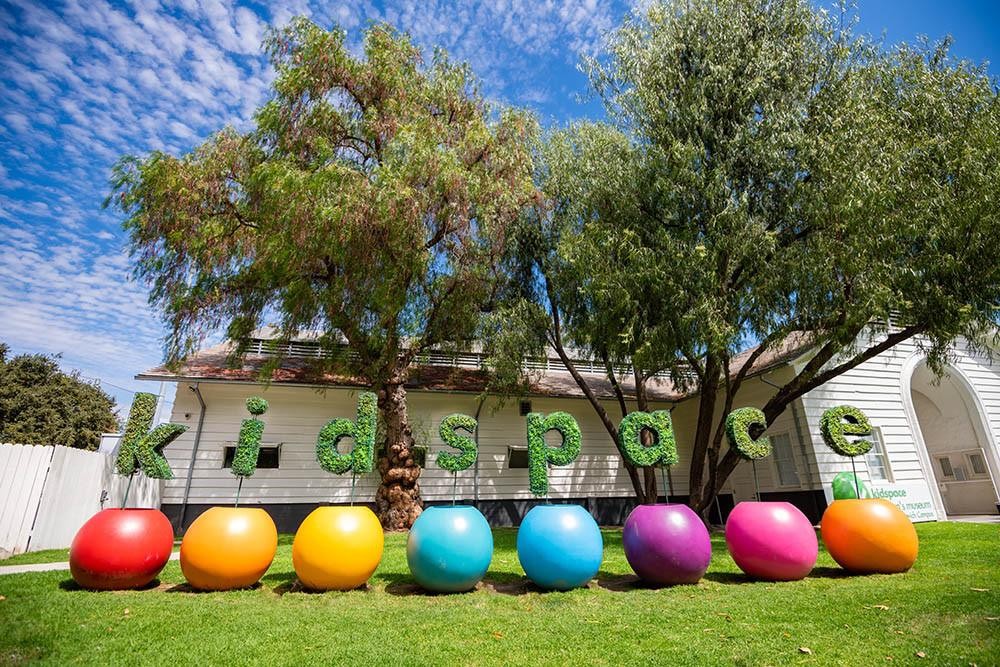
Kidspace Museum in Pasadena, CA.
Kidspace Children’s Museum — Best for Younger Children
Kidspace in Pasadena is not a traditional museum with a children’s area attached. The entire institution is designed around learning through play.
Its 3.5-acre campus offers more than 40 hands-on experiences, encouraging children to climb, build, create, splash, experiment, and investigate their surroundings.
That philosophy makes an important difference. Younger visitors don’t spend the day being told what not to touch. Physical activity and curiosity are central to the experience.
Kidspace is particularly strong for families with children roughly ages one through ten, and its outdoor spaces make it feel as much like an exploration environment as an indoor museum.
What visitors consistently like: The freedom to explore, water play, outdoor exhibits, creative activities, and the museum’s focus on active, rather than passive, learning.
What to know before you go: Much of the experience is outdoors, and some exhibits involve water. The museum specifically recommends bringing a change of shoes if children plan to use water-play areas.
Best for: Toddlers, preschoolers, elementary-age children, parents looking for active play, and families who don’t want a quiet gallery experience.
Official site: Kidspace Children’s Museum
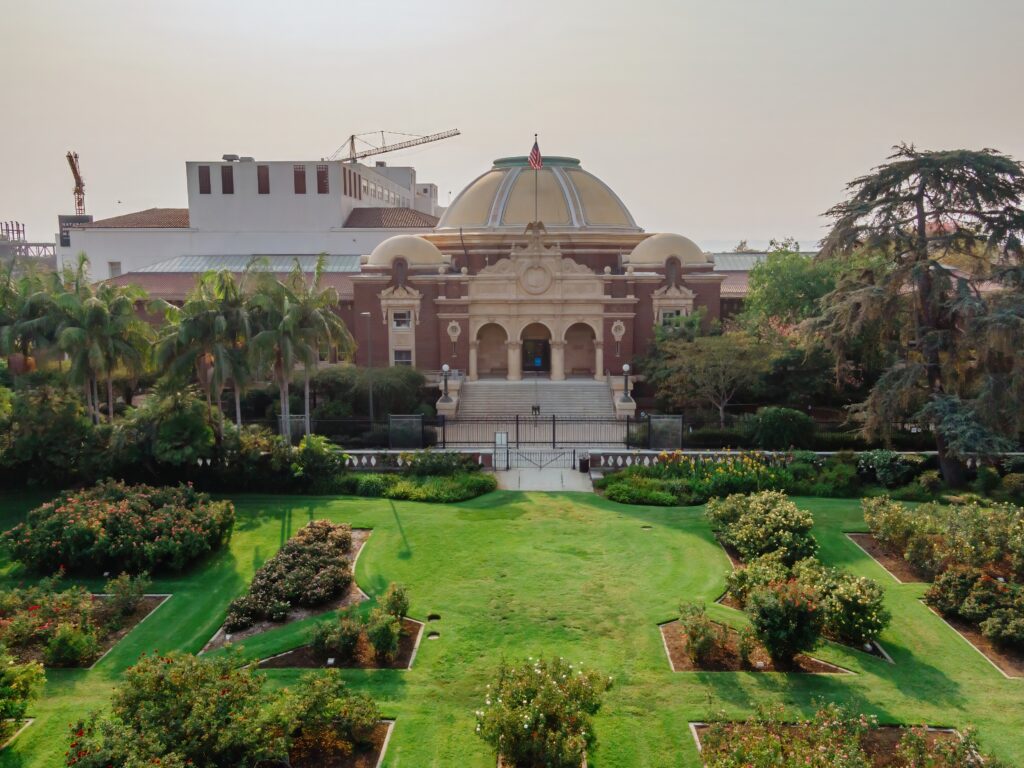
The Natural History Museum of Los Angeles County, USA, stands as a beacon of knowledge. Visitors explore exhibits, fostering curiosity and education about the natural world by Zenstratus.
Natural History Museum of Los Angeles County — Best Interactive Natural History Experience
The Natural History Museum combines the appeal of a classic museum—dinosaurs, fossils, gems, animals, and collections—with increasingly participatory ways of exploring those subjects.
Children may come for the dinosaurs, but the museum offers much more. Visitors can investigate Los Angeles history, ecosystems, gardens, minerals, mammals, and changing scientific exhibitions.
Behind-the-scenes views and programs help connect museum collections with the scientists who study them, making natural history feel like an active field of research rather than simply a collection of things from the past.
What visitors consistently like: Dinosaurs, a variety of galleries, strong family appeal, beautiful specimens, and the ability to spend several hours without getting tired of a single subject.
What to know before you go: The museum is substantial. Trying to see everything can turn a family visit into a marathon. Choosing several priority areas often makes for a better experience.
Best for: Families, dinosaur enthusiasts, animal lovers, science-minded children, teens, and visitors who want one museum with a very broad range of subjects.
Official site: Natural History Museum of Los Angeles County
Discovery Cube Los Angeles — Best for Experimentation and Problem-Solving
Discovery Cube Los Angeles is built on a straightforward idea: children understand science better when they can participate in it.
Instead of long galleries built primarily around collections, the experience emphasizes experimentation, problem-solving, environmental science, engineering, and activities that invite children to take action.
That makes Discovery Cube especially useful for younger elementary and middle-school visitors who want to move quickly from one challenge to the next.
What visitors consistently like: Hands-on activities, approachable science, opportunities for children to participate independently, and the focus on learning through experimentation.
What to know before you go: This is very much a children’s science experience. Adults without children may prefer the California Science Center's broader exhibitions.
Best for: Elementary-age children, STEM learning, school groups, homeschool families, and children who need to move rather than observe.
Official site: Discovery Cube Los Angeles
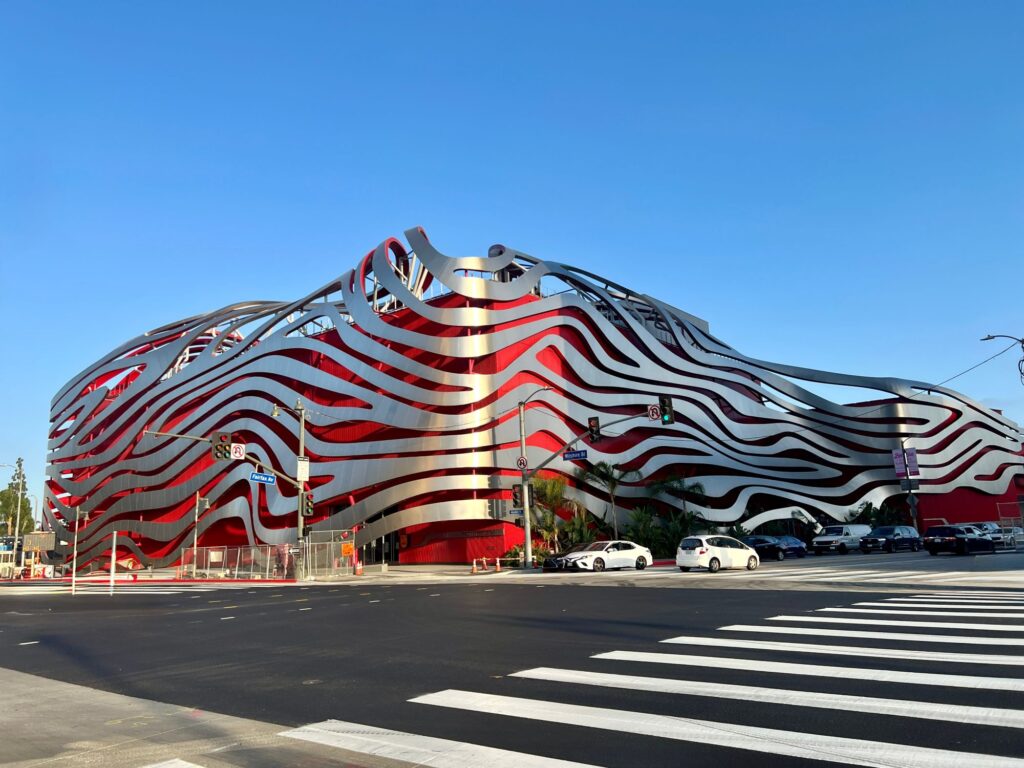
Striking curved building facade of Petersen Automotive Museum with flowing red and silver striped pattern, resembling ribbons or waves, clear blue sky above by Vesperstock.
Petersen Automotive Museum — Best Interactive Design and Engineering Experience
The Petersen is best known for its vehicle collection, but it is also an effective place to understand design and engineering.
Visitors can move beyond simply looking at beautiful cars and explore how vehicles are imagined, designed, built, customized, raced, and incorporated into popular culture.
Children may initially be drawn to movie cars or dramatic vehicles, while older visitors often focus on the engineering and design decisions behind them.
What visitors consistently like: Movie cars, rare vehicles, interactive elements, the Vault, and how exhibitions connect cars to entertainment and culture.
What to know before you go: The additional Vault tour strongly appeals to serious car enthusiasts but adds cost and time to the visit.
Best for: Car lovers, teens, families, engineers, designers, movie fans, and visitors interested in technology.
Official site: Petersen Automotive Museum
What Makes an Interactive Museum Actually Good?
Interactive does not simply mean adding a touchscreen.
The best interactive museums give visitors some agency. You may conduct an experiment, climb through an environment, solve a problem, manipulate an object, navigate a historic space, build something, or choose which story to follow.
That distinction helps you decide where to go.
For traditional hands-on science, start with the California Science Center.
For young children who learn through movement and play, choose Kidspace.
For immersive history inside an authentic environment, explore Battleship IOWA.
For dinosaurs and natural history with multiple ways to engage, visit the Natural History Museum.
For child-centered experimentation, consider Discovery Cube Los Angeles.
For engineering and design tied to one of Los Angeles’ great cultural obsessions, visit the Petersen Automotive Museum.
The common thread is that at all of them, visitors have something to do.