
Los Angeles has no shortage of museums that describe themselves as family-friendly. That doesn’t mean every one will work equally well for your family.
A four-year-old who wants to climb and splash needs a different museum from a twelve-year-old obsessed with dinosaurs, a teenager fascinated by engineering, or a child who would happily spend all afternoon looking at cars.
The best way to choose a Los Angeles museum for kids, therefore, isn't to rank them from first to last. Instead, match the museum to the age and interests of the children you are bringing.
Here are some of the strongest choices.
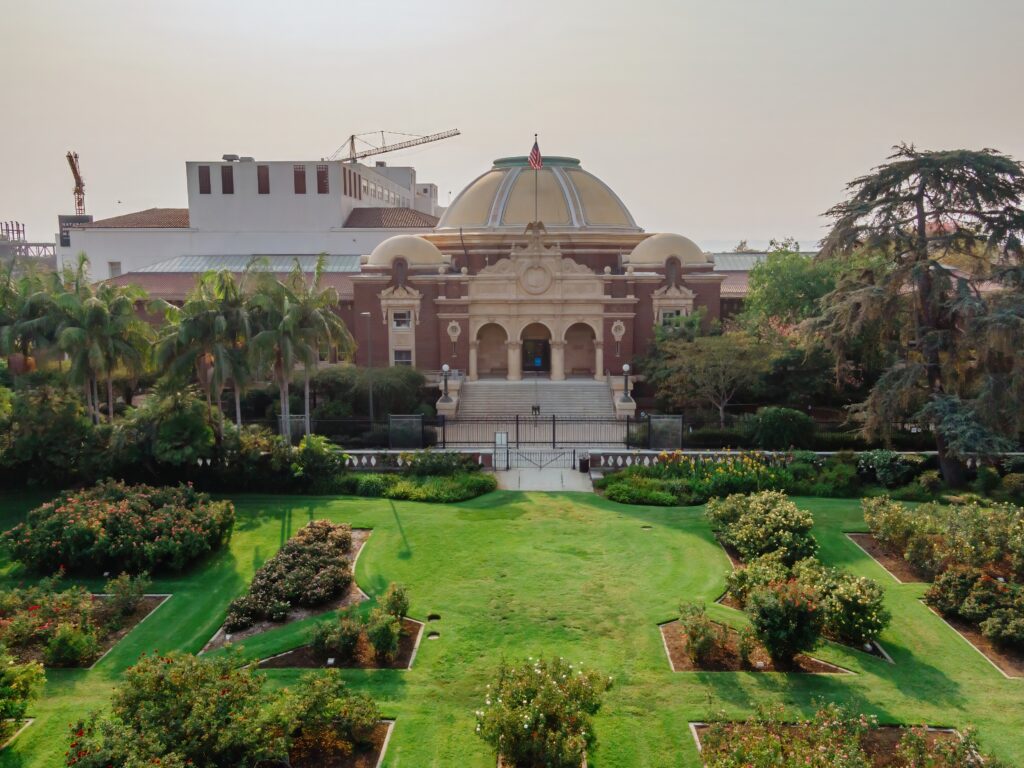
The Natural History Museum of Los Angeles County, USA, stands as a beacon of knowledge. Visitors explore exhibits, fostering curiosity and education about the natural world by Zenstratus.
Natural History Museum of Los Angeles County — Best Overall Natural History Museum
The Natural History Museum in Exposition Park is the broadest science-and-nature museum experience in Los Angeles.
Dinosaurs may be the headline attraction, but visitors can also explore mammals, minerals, insects, ecosystems, gardens, and Southern California's natural and cultural history.
That range is especially useful for families because the museum doesn't rely on one subject to hold everyone’s attention.
What visitors consistently like: Dinosaurs, a wide range of collections, family appeal, impressive specimens, and enough content to support a long visit.
What to know before you go: The museum is large. Families often have a better experience by choosing several priority galleries rather than trying to see everything.
Best for: Families, dinosaur enthusiasts, science-minded children, animal lovers, and visitors wanting a broad natural-history experience.
Official Site: Natural History Museum of Los Angeles County
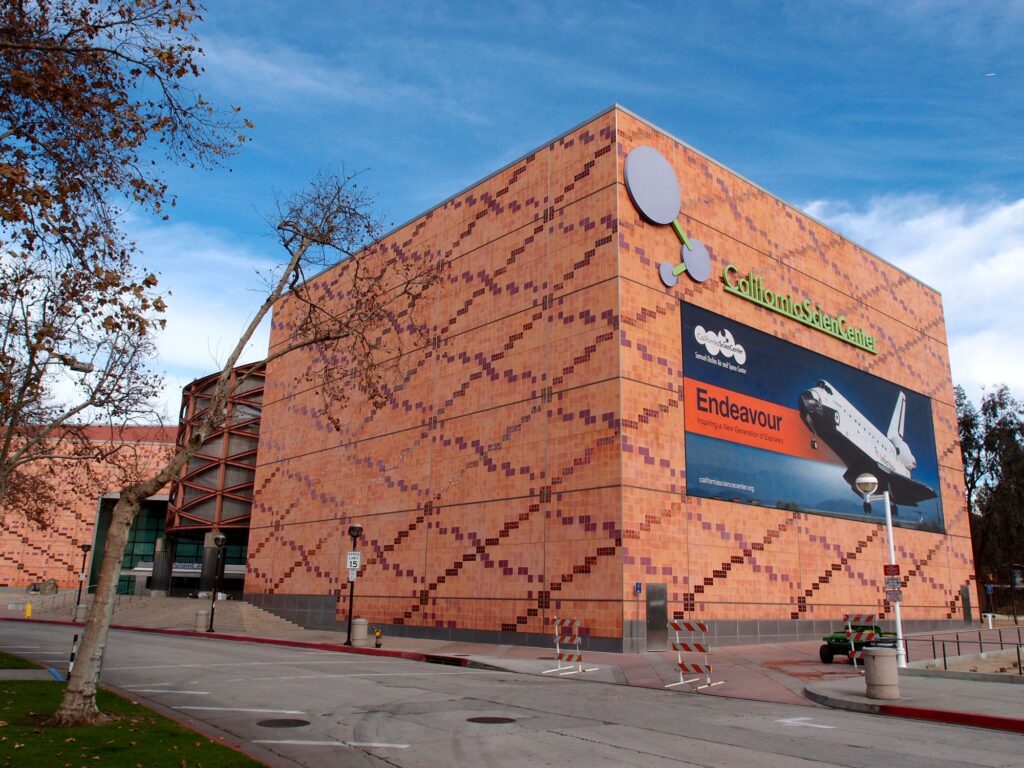
California Science Center Featuring the Endeavour Space Shuttle by Eric BVD.
California Science Center — Best for Hands-On Science
The California Science Center is built on the idea that visitors understand science better when they can investigate it.
Exhibits explore ecosystems, technology, engineering, living systems, and scientific principles through interactive experiences and demonstrations.
Its location in Exposition Park also makes it one of the easiest museums to pair with the Natural History Museum.
What visitors consistently like: Hands-on experiences, family appeal, broad scientific topics, and opportunities for children to participate rather than observe.
What to know before you go: Some special exhibitions and major experiences may require separate timed tickets even when general admission is free.
Best for: Families, school-age children, STEM enthusiasts, homeschoolers, and visitors who prefer interactive museums.
Official site: California Science Center

Griffith Observatory at twilight by John.
Griffith Observatory — Best for Astronomy and the Los Angeles Experience
Griffith Observatory combines science with one of Los Angeles's most recognizable settings.
Inside, visitors explore astronomy and humanity’s understanding of the universe. Outside, the city becomes part of the experience, with views of Los Angeles and the Hollywood Sign.
The observatory is therefore more than an astronomy museum. It is also architecture, history, popular culture, and a major civic landmark.
What visitors consistently like: The views, telescopes, astronomy exhibits, architecture, planetarium programming, and visiting at sunset or after dark.
What to know before you go: Crowds and parking can be challenging, especially on weekends and around sunset. Plan transportation before you arrive.
Best for: First-time visitors, families, astronomy fans, photographers, couples, and anyone wanting a museum experience strongly tied to Los Angeles.
Official site: California Science Center
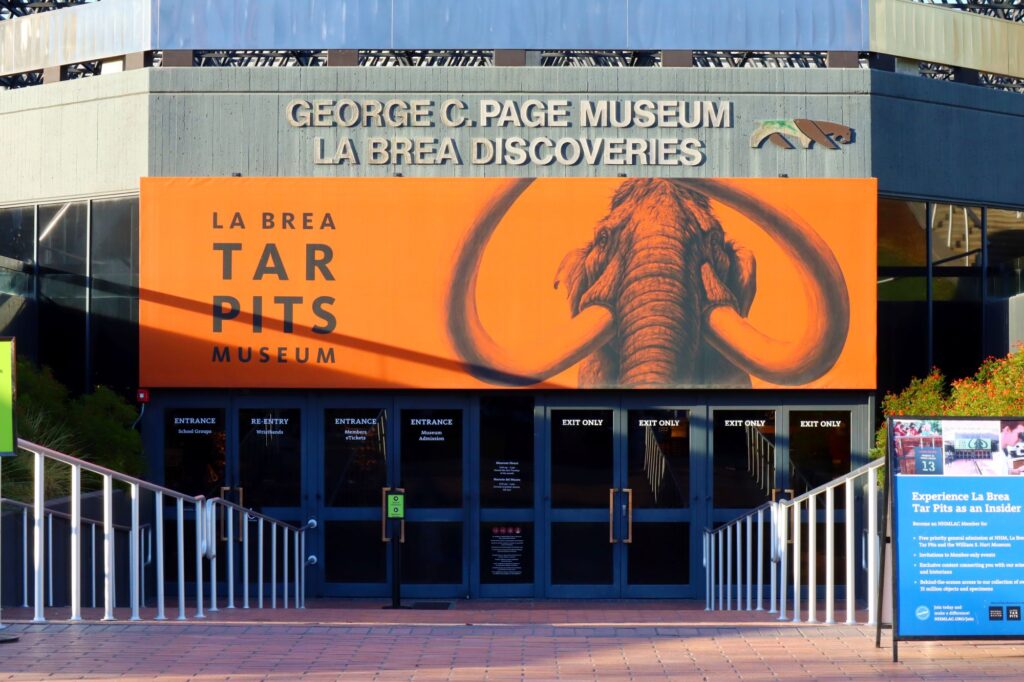
LA BREA TAR PITS and Museum, one of the world’s most famous fossil excavation sites located at 5801 Wilshire Blvd, Los Angeles by Walter Cicchetti.
La Brea Tar Pits — Best for Paleontology in Place
La Brea Tar Pits offers something few science museums can: the scientific site and the subject are the same place.
The fossils recovered from the asphalt seeps help scientists reconstruct prehistoric Los Angeles and the animals that lived here during the Ice Age.
That makes the site especially effective for visitors who want to see how scientific evidence connects to a real landscape.
What visitors consistently like: Seeing the tar seeps, connecting fossils to the actual discovery site, Ice Age animals, and realizing that important scientific research is happening in the middle of Los Angeles.
What to know before you go: The indoor museum is currently closed for major renovations, while outdoor areas and site experiences remain open. Check the current visitor information before planning a trip.
Best for: Families, fossil enthusiasts, science lovers, students, and visitors interested in prehistoric Los Angeles.
Official site: La Brea Tar Pits
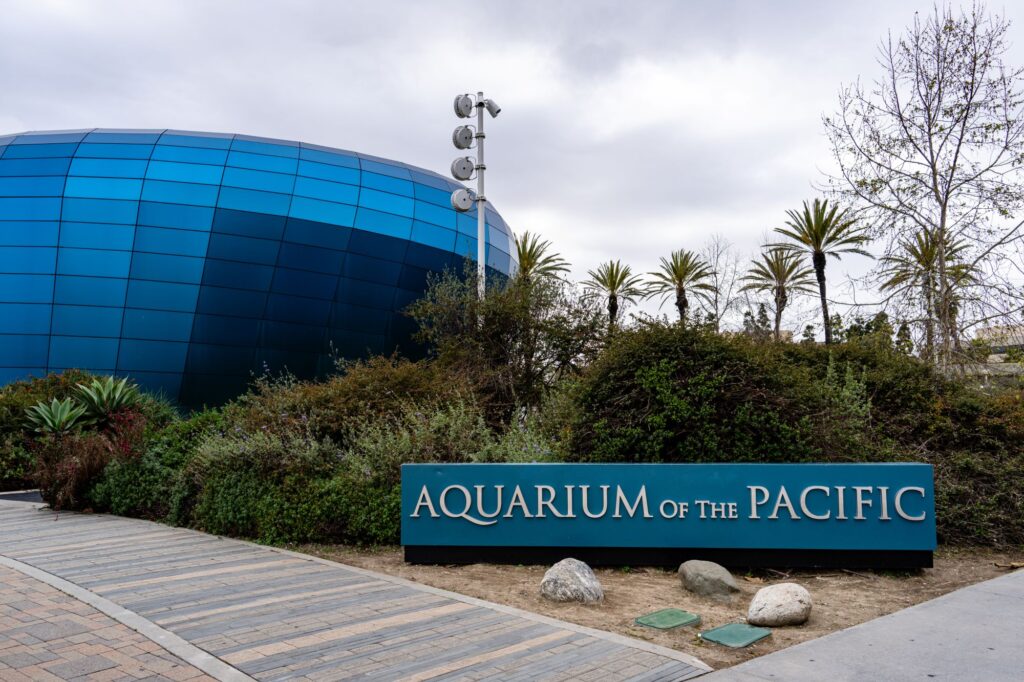
The Aquarium of the Pacific is Southern California’s largest Aquarium. Credit Rosemarie Mosteller – stock.adobe.com.
Aquarium of the Pacific — Best for Marine Life
The Aquarium of the Pacific in Long Beach expands a Los Angeles science itinerary into the ocean.
Its exhibits focus on the Pacific's marine environments and species, making it one of the region's best choices for visitors interested in ocean life, conservation, and ecosystems.
Its harbor location also allows visitors to combine the aquarium with other Long Beach attractions.
What visitors consistently like: A wide variety of marine life, family appeal, immersive exhibits, touch experiences, and the waterfront location.
What to know before you go: This is a major family attraction, so weekends and school holidays can be busy.
Best for: Families, marine-life enthusiasts, younger children, ocean lovers, and visitors to Long Beach.
Cabrillo Marine Aquarium — Best for Southern California Coastal Science
Cabrillo Marine Aquarium in San Pedro focuses closely on the marine environment immediately outside its doors.
That local emphasis makes it a useful counterpart to the larger Aquarium of the Pacific. Visitors can learn about Southern California tide pools, marine animals, coastal ecosystems, and how the shoreline connects to the larger Pacific environment.
What visitors consistently like: Local focus, approachable scale, family programming, marine-life education, and proximity to Cabrillo Beach.
What to know before you go: This is a smaller institution than the Aquarium of the Pacific, which is part of its appeal for families who want a more focused visit.
Best for: Families, younger children, tide-pool enthusiasts, school groups, and visitors already exploring San Pedro.
Official site: https://www.cabrillomarineaquarium.org/

A rainbow over the Port of Los Angeles main channel, Battleship Iowa, a cruise ship, container port operations and Vincent Thomas suspension bridge. Credit Brad Nixon.
Battleship IOWA — Best for Seeing Engineering as a Complete System
Battleship IOWA is not a traditional science museum, but it is one of the largest engineering objects visitors can explore in Los Angeles.
A battleship brings together propulsion, electricity, communications, navigation, structural engineering, weapons systems, damage control, logistics, and thousands of people into one interconnected environment.
Walking through the ship gives engineering-minded visitors a physical sense of how complicated systems had to operate together at sea.
What visitors consistently like: The scale of the machinery, shipboard systems, massive guns, authentic spaces, and the opportunity to see engineering in a real-world environment.
What to know before you go: The ship is historic, so some areas have ladders, narrow passageways, and authentic shipboard conditions.
Best for: Engineering-minded families, teens, STEM students, military-history enthusiasts, and visitors fascinated by large machines.
Official site: https://pacificbattleship.com
Which Science or Nature Museum Should You Choose?
For dinosaurs and natural history, choose the Natural History Museum.
For hands-on science, visit the California Science Center.
For astronomy combined with an iconic Los Angeles setting, go to Griffith Observatory.
For fossils tied to an active scientific site, explore the La Brea Tar Pits.
For marine life, choose the Aquarium of the Pacific.
For Southern California coastal ecology, visit Cabrillo Marine Aquarium.
For engineering at an enormous scale, explore Battleship IOWA.