
Los Angeles has one of the most varied art museum landscapes in the country.
Visitors can move from European masters and ancient art to contemporary installations, photography, architecture, Latin American art, automotive design, and experimental spaces that challenge what an art museum should be.
The city’s art institutions are also unusually spread out. Rather than one central museum district, Los Angeles rewards visitors who plan around neighborhoods and interests.
Here are some of the strongest places to start.
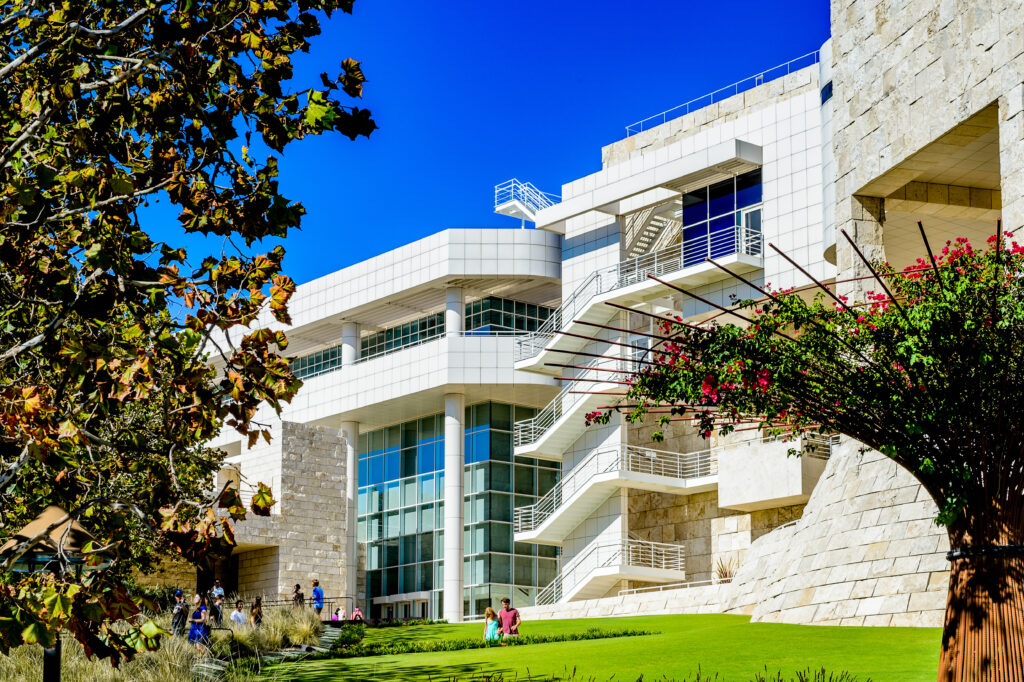
Campus of the J. Paul Getty Museum (Getty Museum), an art museum in California established in 1974 by Anton Ivanov Photo.
Getty Center — Best Overall Art Museum Experience
The Getty Center combines art, architecture, gardens, and views so well that the entire campus becomes part of the experience.
Its collection includes European paintings, sculpture, decorative arts, manuscripts, and photography, but visitors often remember the setting just as strongly as the galleries. Richard Meier’s architecture, the Central Garden, outdoor terraces, and the hilltop location give the museum a sense of place that few institutions can match.
The Getty is especially well suited to visitors who want more than a quick gallery visit. It is easy to spend half a day moving between exhibitions, gardens, architecture, and outdoor spaces.
What visitors consistently like: The setting, architecture, gardens, views, art quality, and the ability to spend several hours outdoors without feeling confined indoors.
What to know before you go: Admission is free, but timed-entry reservations are required, and parking carries a fee—some galleries close periodically for modernization work.
Best for: First-time visitors, art lovers, architecture enthusiasts, couples, photographers, and anyone wanting a full museum-day experience.
Official site: https://www.getty.edu/visit/center/
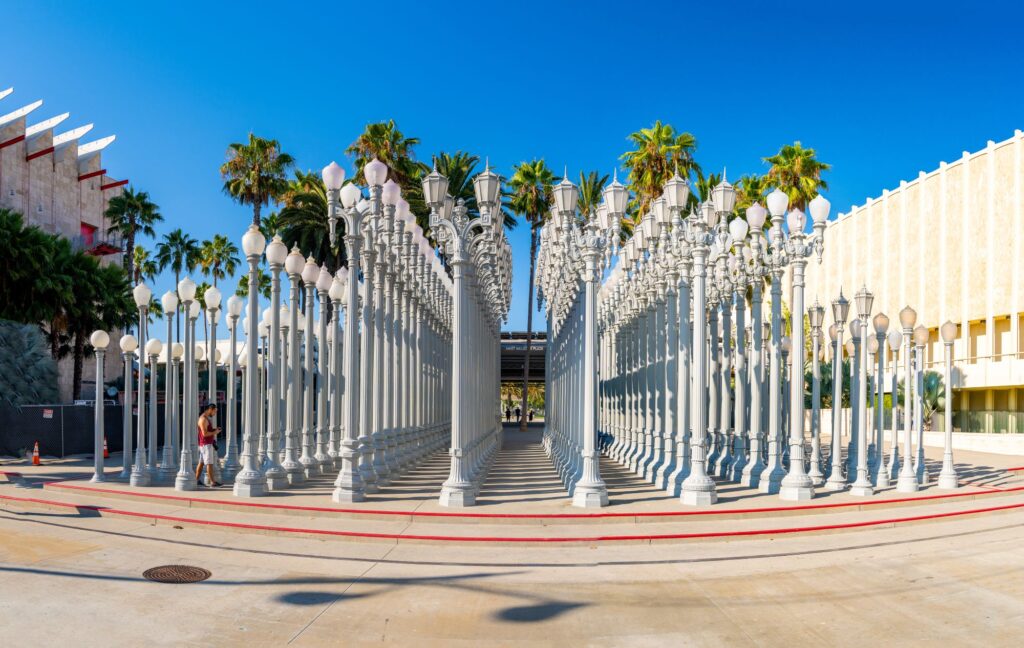
‘Urban Light’ – a large-scale assemblage sculpture by Chris Burden at the Los Angeles County Museum of Art. The installation consists of 202 restored street lamps by Aerial Film Studio.
LACMA — Best for Global Art Across Cultures and Time
The Los Angeles County Museum of Art is one of the city’s foundational art institutions.
Its collection spans thousands of years and multiple cultures, making it a strong choice for visitors who want breadth over a narrow focus. LACMA also sits along Wilshire Boulevard, close to other major cultural institutions.
In 2026, the museum opened the new David Geffen Galleries, adding a significant architectural and exhibition dimension to the campus. LACMA describes itself as the largest art museum in the western United States, with approximately 155,000 objects in its collection.
What visitors consistently like: The breadth of the collection, public art, central location, changing exhibitions, and the ability to encounter many artistic traditions in one visit.
What to know before you go: LACMA is still evolving as a campus. Advance timed-entry tickets are recommended, and Los Angeles County residents receive several admission benefits that visitors from outside the county don't.
Best for: Visitors who want a broad art museum, repeat museumgoers, students, families with older children, and travelers staying near Museum Row.
Official site: https://www.lacma.org/
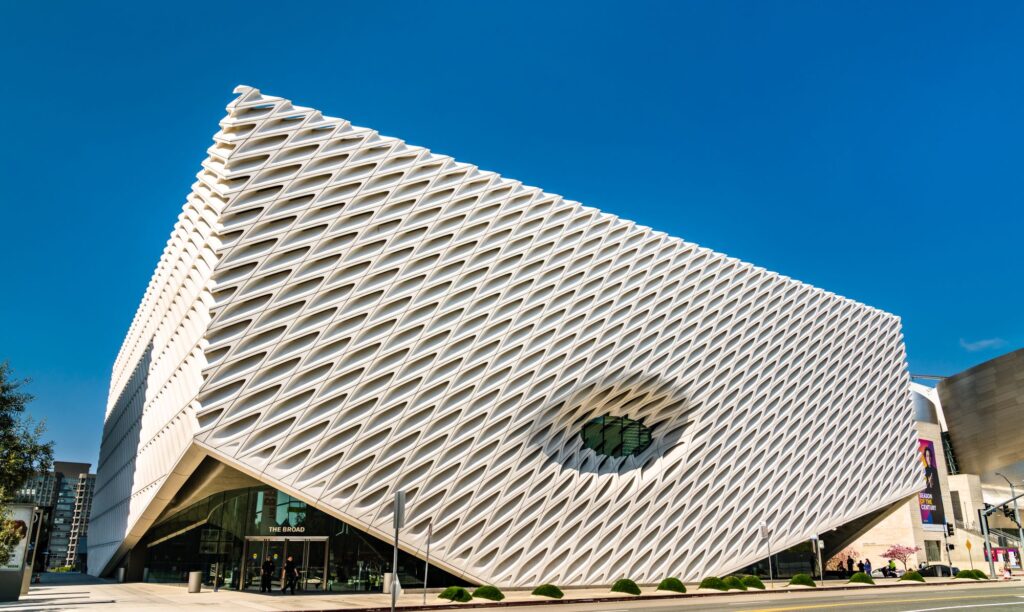
The Broad, a contemporary art museum in Downtown Los Angeles by Leonid Andronov.
The Broad — Best for Contemporary Art
The Broad has become one of Downtown Los Angeles’ defining cultural destinations.
Its focus on postwar and contemporary art appeals especially to visitors who prefer bold, recognizable, and sometimes provocative work over traditional collections organized around historical periods.
The building itself adds to the appeal. Its honeycomb-like exterior and open interior create a contemporary experience that feels deliberately different from older museum institutions.
What visitors consistently like: The contemporary collection, architecture, recognizable artists, compact size, and Downtown location.
What to know before you go: General admission remains free, but reservations are often the best way to avoid uncertainty during busy periods.
Best for: Contemporary-art fans, younger visitors, first-time museumgoers, Downtown itineraries, and people who want a focused visit rather than an all-day museum.
Official site: https://www.thebroad.org/
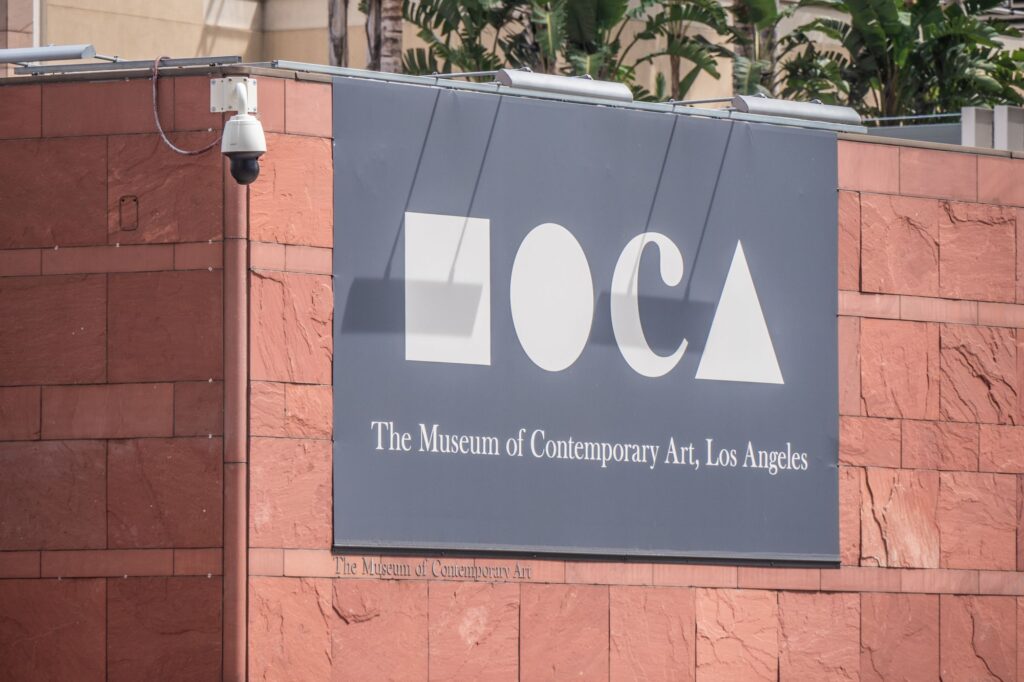
Museum of Contemporary Art, Los Angeles by 4kclips.
Museum of Contemporary Art — Best for Serious Contemporary Art
MOCA gives contemporary art another major institutional home in Los Angeles.
Its exhibitions often highlight artists, movements, and ideas that have shaped modern and contemporary art, rather than simply presenting the most familiar names.
For visitors who enjoy The Broad but want a different curatorial perspective, MOCA is a natural complement.
What visitors consistently like: Strong exhibitions, serious contemporary-art focus, manageable scale, and proximity to Downtown cultural attractions.
What to know before you go: Exhibition schedules matter here. Check what is on view before planning your visit, especially if you are traveling specifically for contemporary art.
Best for: Contemporary-art enthusiasts, students, artists, repeat visitors, and people already exploring Downtown Los Angeles.
Official site: https://www.moca.org/
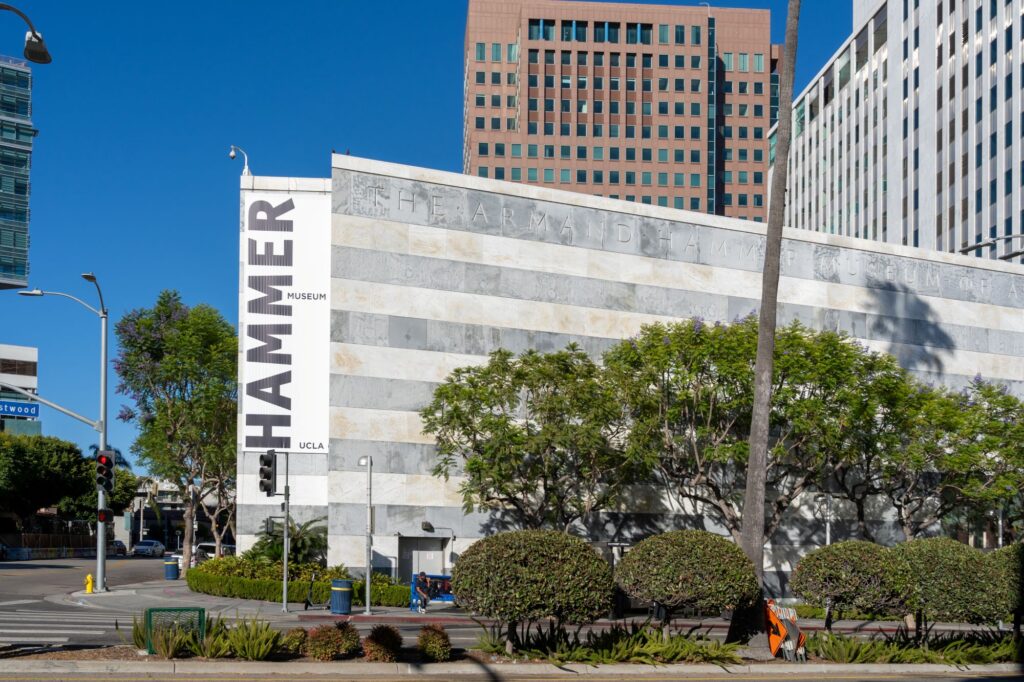
The Hammer Museum is an art museum and cultural center in Los Angeles, photo by JHVEPhoto.
Hammer Museum — Best for Art and Ideas
The Hammer Museum in Westwood often feels less like a traditional collection museum and more like a place where art, culture, and ideas are in conversation.
Its exhibitions frequently engage with contemporary artists, social issues, identity, politics, and changing cultural perspectives.
That makes the Hammer particularly appealing to visitors who enjoy museums that provoke discussion rather than simply present objects.
What visitors consistently like: Thoughtful exhibitions, manageable size, contemporary focus, and the museum’s willingness to explore difficult or timely ideas.
What to know before you go: Because exhibitions change regularly, the experience can differ considerably from one visit to another.
Best for: Contemporary-art visitors, UCLA-area travelers, students, artists, and people who enjoy discussion-driven museums.
Official site: https://hammer.ucla.edu/
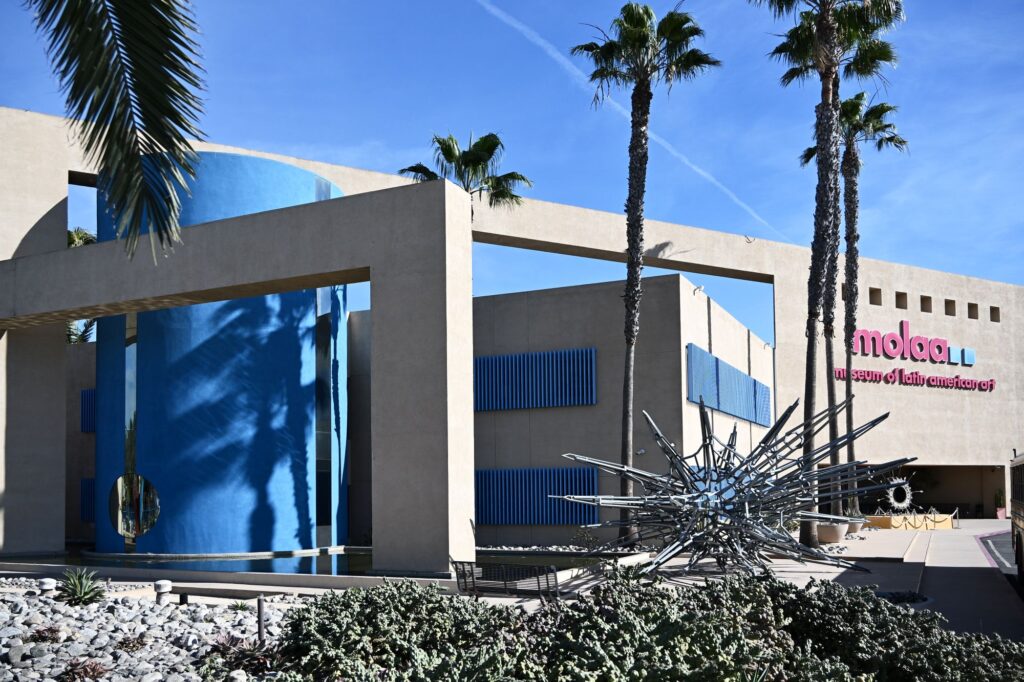
The Museum of Latin American Art, MOLAA, is to modern and contemporary Latin American and Latino art. Photo by Steve Cukrov.
Museum of Latin American Art — Best for Latin American and Latino Art
The Museum of Latin American Art in Long Beach offers a perspective not duplicated by the larger museums closer to central Los Angeles.
Its focus on modern and contemporary Latin American and Latino art reflects cultural connections especially relevant to Southern California.
MOLAA works well as part of a Long Beach museum day or for visitors who want to move beyond the largest institutions.
What visitors consistently like: Focused exhibitions, an approachable scale, a cultural perspective, and the chance to discover artists not always represented prominently elsewhere.
What to know before you go: MOLAA is outside the central Los Angeles museum corridor, so it makes the most sense when paired with Long Beach or harbor-area attractions.
Best for: Contemporary-art fans, visitors interested in Latin American culture, Long Beach travelers, and repeat museumgoers.
Official site: https://molaa.org/
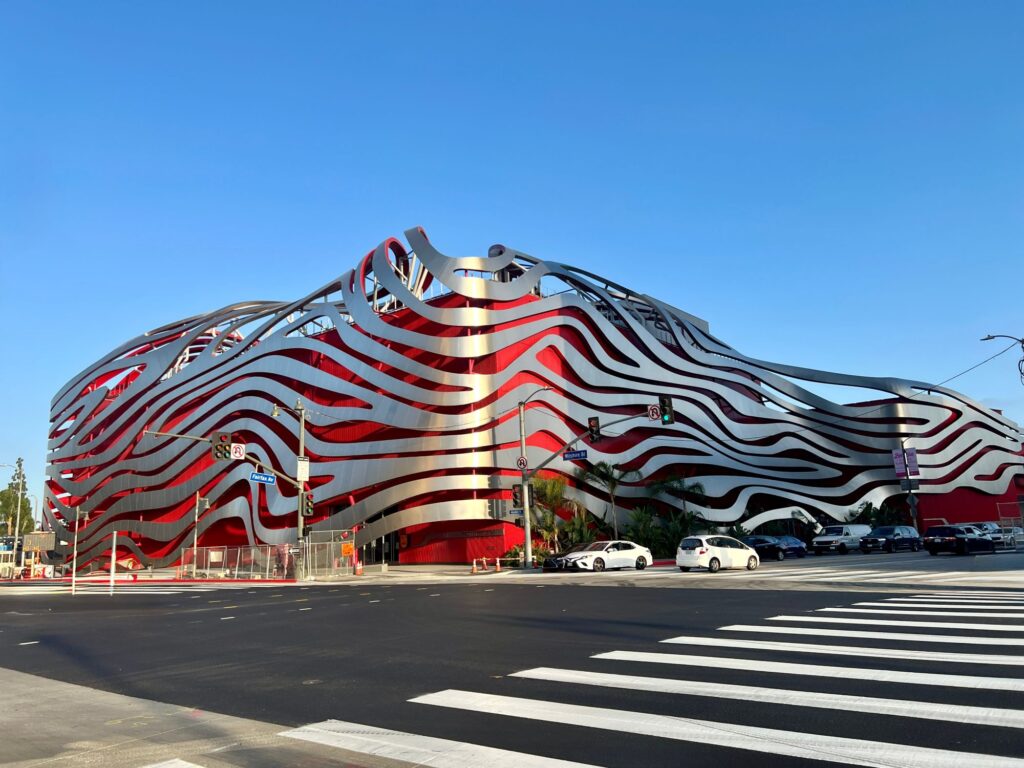
Striking curved building facade of Petersen Automotive Museum with flowing red and silver striped pattern, resembling ribbons or waves, clear blue sky above by Vesperstock.
Petersen Automotive Museum — Best for Industrial and Automotive Design
The Petersen belongs in an art-and-design guide because automobiles are designed objects.
Its exhibitions explore proportion, materials, aerodynamics, technology, fashion, popular culture, customization, and engineering alongside automotive history.
Visitors who think they are “not car people” are often surprised by how much of the museum is really about design.
What visitors consistently like: Dramatic vehicles, movie cars, design, architecture, engineering, and the optional Vault experience.
What to know before you go: Serious automobile fans may want to allow extra time for the separately ticketed Vault.
Best for: Designers, engineers, automotive enthusiasts, teens, architecture fans, and visitors interested in the intersection of function and aesthetics.
Official site: https://www.petersen.org/
Which Los Angeles Art Museum Should You Choose?
For the most complete art-and-architecture experience, choose the Getty Center.
For global collections across centuries and cultures, visit LACMA.
For contemporary art in Downtown Los Angeles, start with The Broad or MOCA.
For art connected with current ideas and cultural conversations, choose the Hammer Museum.
For Latin American and Latino art, visit MOLAA.
And for design expressed through machines rather than canvases, explore the Petersen Automotive Museum.
Los Angeles art museums are strongest when you treat them not as a single ranking, but as different ways to see the city’s creative culture.