
Los Angeles has no shortage of museums that describe themselves as family-friendly. That doesn’t mean every one will work equally well for your family.
A four-year-old who wants to climb and splash needs a different museum from a twelve-year-old obsessed with dinosaurs, a teenager fascinated by engineering, or a child who would happily spend all afternoon looking at cars.
The best way to choose a Los Angeles museum for kids, therefore, isn't to rank them from first to last. Instead, match the museum to the age and interests of the children you are bringing.
Here are some of the strongest choices.
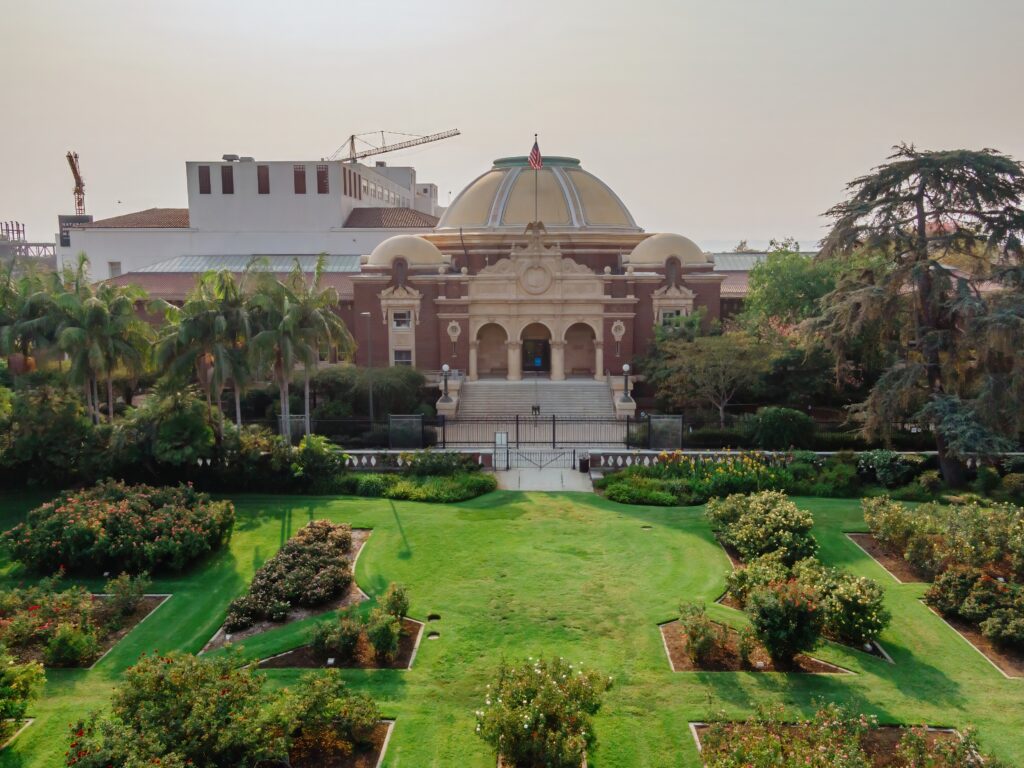
The Natural History Museum of Los Angeles County, USA, stands as a beacon of knowledge. Visitors explore exhibits, fostering curiosity and education about the natural world by Zenstratus.
Natural History Museum of Los Angeles County — Best Overall Family Museum
If your children have different interests or you're not sure what will capture their attention, the Natural History Museum is one of the safest choices in Los Angeles.
Dinosaurs provide the obvious draw, but families can also explore mammals, gems and minerals, insects, nature, Los Angeles history, gardens, and changing exhibitions.
The breadth matters. A child who loses interest in one gallery can encounter something completely different in the next.
The museum is also substantial enough for families to choose their own level of commitment. You can focus on dinosaurs and a few favorite galleries or turn the visit into most of a day.
What families consistently like: Dinosaurs, the variety, opportunities for discovery, impressive specimens, and having enough different subjects to keep siblings with different interests engaged.
What parents should know: Do not feel obligated to see everything. Families often have a better visit when they choose a few priorities and leave the rest for next time.
Best ages: Approximately 4 and up, although dinosaur-loving younger children can have a great time.
Best for: Dinosaurs, animals, fossils, nature, science, and families with mixed interests.
Official Site: Natural History Museum of Los Angeles County
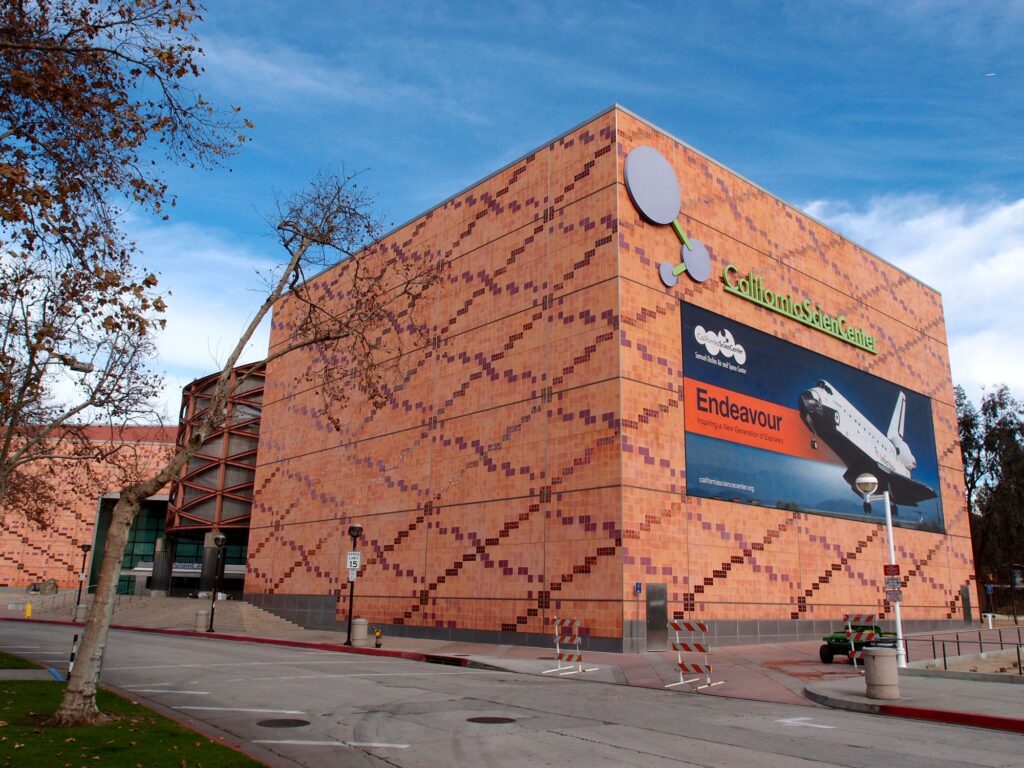
California Science Center Featuring the Endeavour Space Shuttle by Eric BVD.
California Science Center — Best for Kids Who Ask “How Does That Work?”
For children fascinated by how things move, live, fly, communicate, or function, the California Science Center is an excellent choice.
Instead of simply reading explanations, many experiences focus on experimentation and observation. That makes the museum particularly effective for kids who need to interact with something before the idea clicks.
Parents also benefit from its location in Exposition Park. Pairing the Science Center with the Natural History Museum can turn the area into a full museum day without repeatedly putting children back into the car.
What families consistently like: Hands-on science, variety, educational value, and activities that make complicated subjects approachable.
What parents should know: General access and special-ticketed experiences may operate differently, so check what's available before you go.
Best ages: About 5–14, with plenty for older visitors.
Best for: STEM, science, technology, curious children, and families who enjoy experimenting together.
Official site: California Science Center
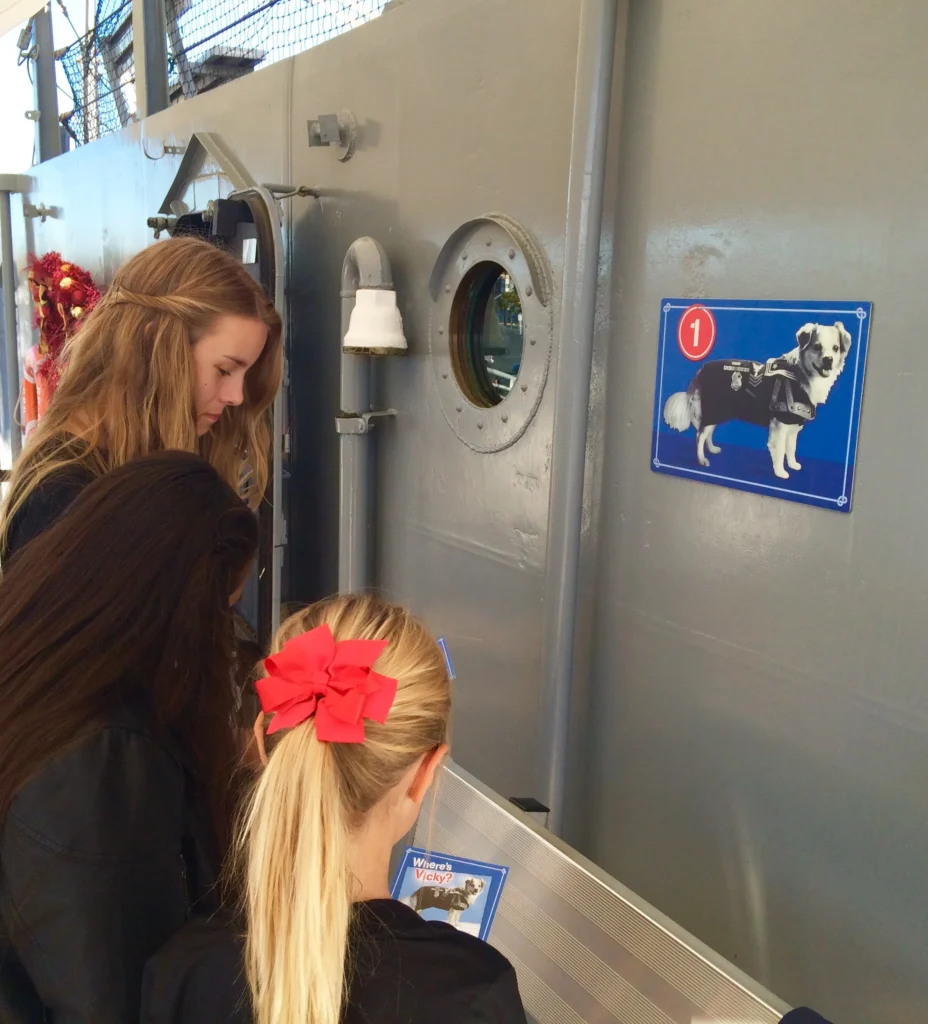
Vicky the dog scavenger hunt aboard Battleship IOWA.
Battleship IOWA — Best for Kids Who Want an Adventure
Battleship IOWA works particularly well for children old enough to see the museum as an exploration.
Instead of entering a conventional gallery, families board an enormous historic battleship on the LA Waterfront in San Pedro. Children move through actual passageways and decks, encounter massive guns and machinery, and begin to understand how thousands of sailors lived and worked aboard a floating community.
Life of a Sailor gives families another way into the story by focusing on sailor skills, jobs, teamwork, and individual stories. Younger visitors can also follow Vicky the Dog through a scavenger-hunt-style experience aboard the ship.
For children who like ships, machines, military history, engineering, or simply climbing aboard something enormous, the physical setting can do much of the work an interactive exhibit would normally do.
What families consistently like: Exploring the ship, its enormous scale, the guns, knowledgeable crew and volunteers, sailor stories, and the feeling of being somewhere completely different from an ordinary museum.
What parents should know: This is an authentic battleship, not a purpose-built children’s museum. Some areas contain ladders, narrow passages, and shipboard surfaces. Families with mobility concerns should check the accessible route before visiting.
Best ages: Roughly 6 and up, with particularly strong appeal for older children and teens.
Best for: Ships, engineering, military history, adventure, technology, history, and families looking for an immersive experience.
Official site: Battleship IOWA
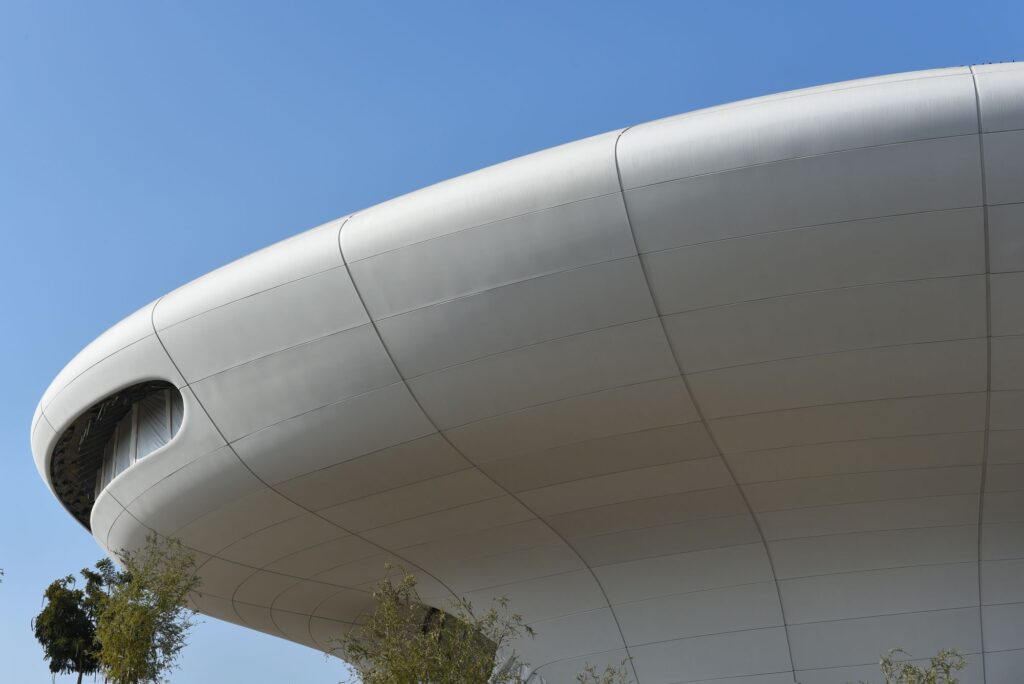
Detail of the Lucas Museum of Narrative Art in Exposition Park, still under construction, opening in 2026. Photo by Steve Cukrov.
Lucas Museum of Narrative Art — Best for Art, Film, and Storytelling
The Lucas Museum of Narrative Art in Exposition Park is one of Los Angeles's newest major cultural attractions, bringing fine art, illustration, comics, and cinema together in a striking architectural landmark.
Founded by filmmaker George Lucas and Mellody Hobson, the museum explores how images tell stories and shape culture. Opened in September 2026, its expansive galleries feature everything from Norman Rockwell paintings and comic book illustrations to cinematic artifacts and Star Wars memorabilia. The museum also features film screenings, landscaped gardens, and spaces designed to encourage visitors to experience storytelling in unexpected ways.
As a newly opened museum, long-term visitor review patterns are still developing. Its distinctive architecture, ambitious collection, and combination of traditional art with popular culture make it a notable addition to Los Angeles's museum landscape.
What visitors consistently like: Visitor feedback is still limited, but major attractions include the distinctive architecture, extensive art collections, cinematic exhibits, and the chance to explore visual storytelling across cultures and generations.
What to know before you go: The museum is located in Exposition Park near the California Science Center and Natural History Museum. Timed-entry tickets are required, and reservations are recommended. This museum focuses on visual storytelling, not exclusively Star Wars or George Lucas's films.
Best for: Art enthusiasts, movie fans, families, Star Wars enthusiasts, architecture lovers, and visitors interested in the relationship between art and popular culture.
Official site: https://lucasmuseum.org/
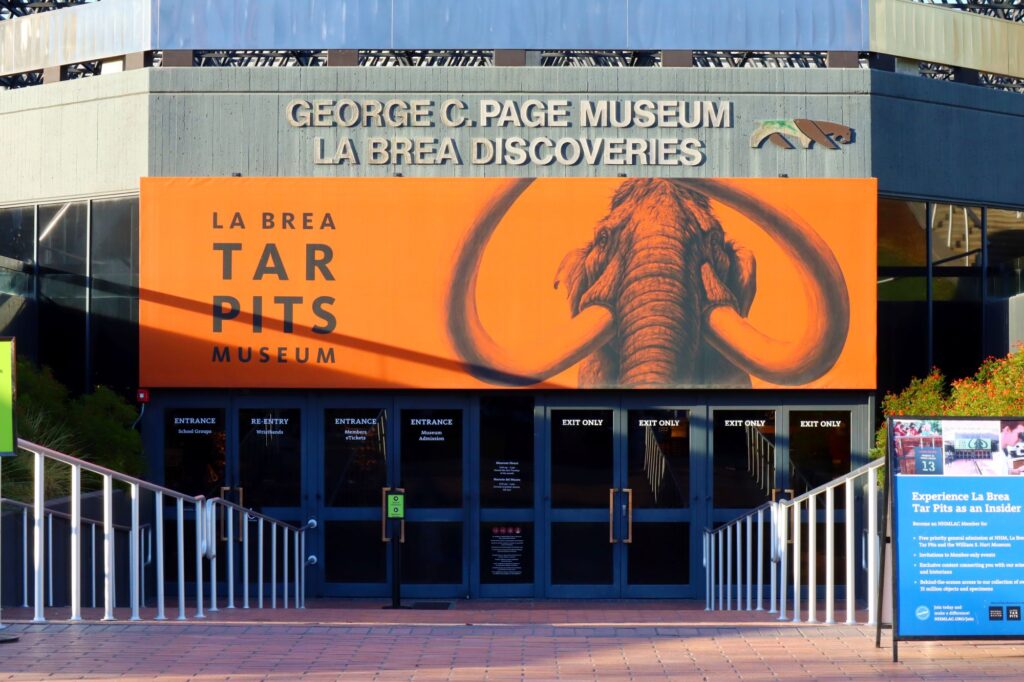
LA BREA TAR PITS and Museum, one of the world’s most famous fossil excavation sites located at 5801 Wilshire Blvd, Los Angeles by Walter Cicchetti.
La Brea Tar Pits — Best for Kids Fascinated by Fossils
Telling a child that giant prehistoric animals once walked exactly where they are standing is an immediate advantage.
La Brea Tar Pits makes paleontology feel real, right here.
Instead of imagining fossils being discovered in some distant desert, children can encounter evidence of Ice Age Los Angeles in the middle of today’s city. Saber-toothed cats, mammoths, dire wolves, and other animals make the subject accessible even to younger children.
The active scientific work at the site can also help older children understand that paleontology is still a field scientists practice today.
What families consistently like: Fossils, tar seeps, excavation areas, Ice Age animals, and the connection between prehistoric life and modern Los Angeles.
What parents should know: The indoor museum is undergoing major renovations, so families should check which experiences are operating before visiting. The outdoor site remains an important part of the experience.
Best ages: Approximately 5–12, although fossil enthusiasts of any age can enjoy it.
Best for: Fossils, prehistoric animals, science, geology, and children who already love dinosaurs.
Official site: La Brea Tar Pits
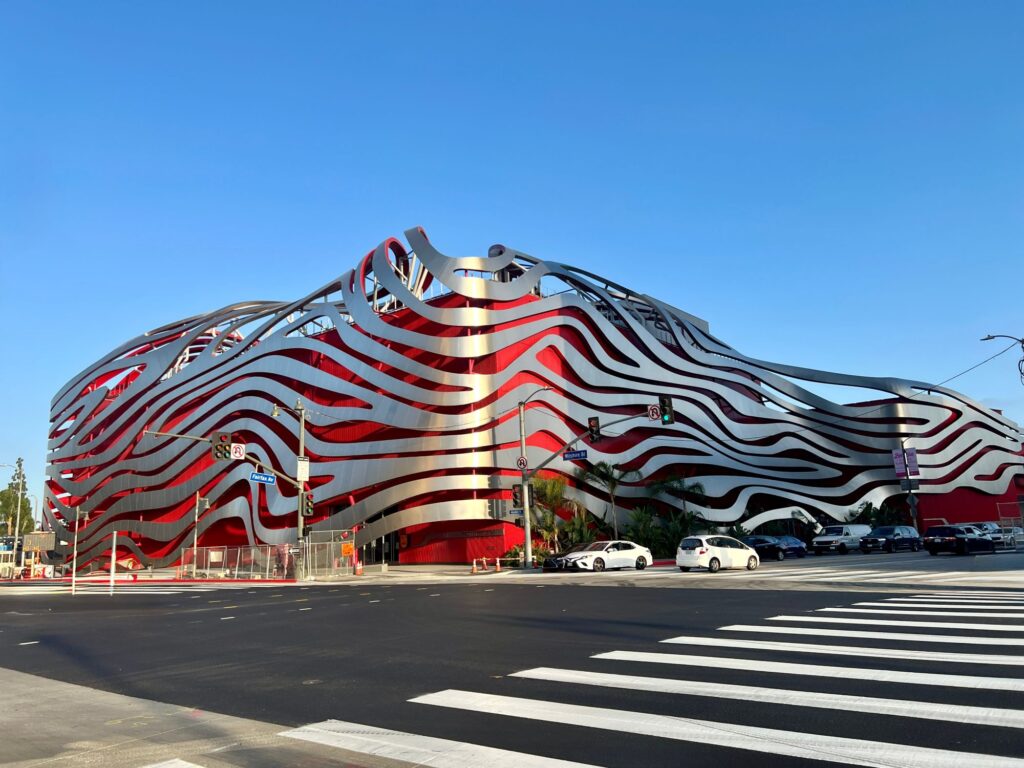
Striking curved building facade of Petersen Automotive Museum with flowing red and silver striped pattern, resembling ribbons or waves, clear blue sky above by Vesperstock.
Petersen Automotive Museum — Best for Car-Loving Kids and Teens
For some children, no amount of museum interpretation can compete with seeing a Batmobile, race car, supercar, or extraordinary vehicle in person.
The Petersen makes excellent use of that enthusiasm.
Families encounter cars through history, design, engineering, entertainment, racing, and popular culture. That allows parents to turn an existing interest in cars into conversations about how things are designed and built.
The Petersen is also one of the museums on this list that can remain appealing as children get older. A teenager interested in engineering, design, film, or automotive culture may enjoy it considerably more than a museum aimed primarily at younger children.
What families consistently like: Movie cars, unusual vehicles, interactive experiences, racing and performance cars, and the sheer range of the collection.
What parents should know: Serious automotive fans may want to add the Vault, which costs extra and takes more time.
Best ages: Approximately 6 through teens.
Best for: Cars, movie vehicles, engineering, design, racing, and technology.
Official site: Petersen Automotive Museum
Discovery Cube Los Angeles — Best for Younger STEM Explorers
Discovery Cube Los Angeles is designed to make science approachable for children.
Hands-on activities invite young visitors to investigate, test ideas, solve problems, and understand scientific concepts by doing something themselves.
That makes it a strong alternative for families whose children aren't ready for the scale of a large museum or who thrive when they can move quickly from activity to activity.
What families consistently like: Participation, kid-friendly science, interactive challenges, and educational activities children can understand without lengthy explanations.
What parents should know: The museum is geared primarily toward children. Families with older teens may get more mileage from the California Science Center, Petersen, or Battleship IOWA.
Best ages: Approximately 3–10.
Best for: Early STEM learning, experimentation, school-age children, and hands-on activities.
Official site: Discovery Cube Los Angeles
Which Los Angeles Museum Is Best for Your Kids?
For toddlers and preschoolers, start with Kidspace Children’s Museum.
For dinosaurs and animals, choose the Natural History Museum.
For hands-on science, visit the California Science Center or Discovery Cube Los Angeles.
For fossils and prehistoric Los Angeles, explore La Brea Tar Pits.
For cars and movie vehicles, choose the Petersen Automotive Museum.
For ships, engineering, history, and an immersive adventure, visit Battleship IOWA.
Your children's age matters, but their interests matter even more. A ten-year-old fascinated by battleships may have a better day aboard IOWA than at a children’s museum, while a five-year-old who wants to run, climb, splash, and build may be happiest at Kidspace.
The best family museum isn't necessarily the one with the most children’s programming. It is the museum that gives your child a reason to become curious.